
Home › Blog › Farm and countryside days
Village Life Experience Vietnam: What to Expect & How to Go
By the Cáo Experiences team · 2026-11-06
A village life experience in Vietnam is a full-day immersion in rural farming, cooking, and family hospitality—usually 7 or 8 hours including transport from the city. We take groups to working villages outside Hanoi, Saigon, or the central regions where you help with rice paddies, vegetable gardens, or animal care, eat lunch cooked by your host family, and learn how food actually grows instead of arriving pre-cut in a restaurant. There's no "resort village" feel: you're in real homes, real fields, sometimes muddy and hot. Most sessions suit ages 10–75; we adapt tasks for fitness and weather. Cáo Experiences coordinates everything by WhatsApp, handles transport, and matches you with English-speaking hosts. Cost varies by location and group size. Wear clothes you can get dirty and bring sun protection.
Why do visitors choose village life over city tours?
City tours show you temples and markets in crowds. Village days let you do something—dig soil, plant seedlings, collect eggs, cook with a grandmother. You're not a spectator; you're part of the rhythm for a morning. That shift from watching to doing changes how people understand where their food comes from and how rural families spend their time. Most guests tell us they expected scenery; they found purpose.

What exactly do you do during a village day?
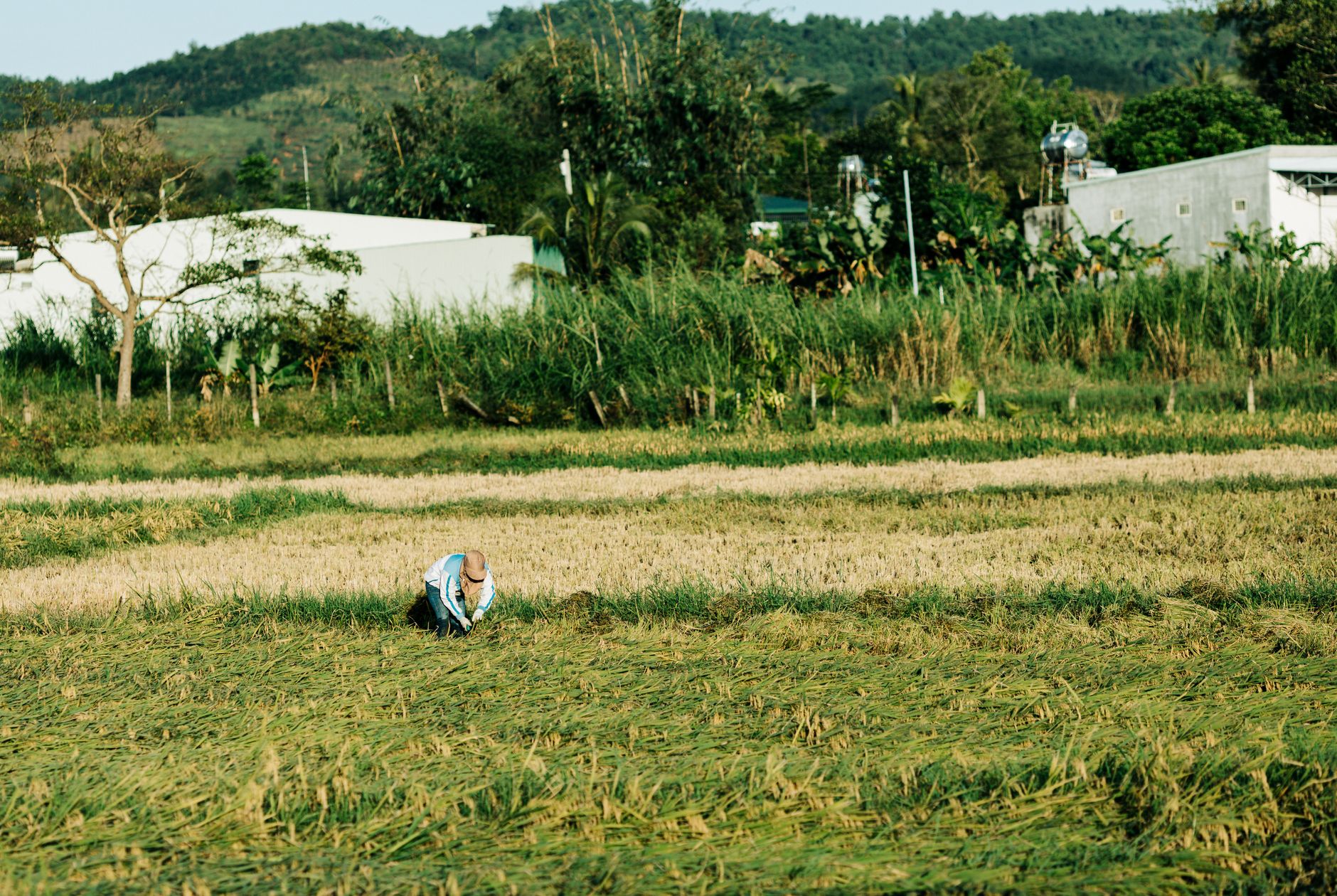
We start before 7 a.m. with a gentle transport ride out of the city—traffic clears by then. You arrive at a family compound with vegetable plots, sometimes paddy fields, maybe chickens or ducks. Your host walks you through their daily tasks. In wet season you might water rows or help transplant rice shoots, hands in mud. In dry season, weeding, compost work, or harvesting vegetables. Mid-morning, you'll often help prepare lunch in the family kitchen: chopping herbs, starting a fire if it's a traditional wood stove, or grinding ingredients by hand. Lunch is what you helped cook, eaten at the family table with the hosts. Afternoon might include a farm visit to see other crops, time in a home garden learning about medicinal or edible plants, or simple crafts—basket weaving or making tools. You leave mid-afternoon, back in the city by 5 or 6 p.m.
How do village experiences adapt for kids, seniors, or limited fitness?
Children ages 6+ love getting muddy and finding insects; we skip heavy lifting and add shorter, playful tasks—picking herbs, feeding animals, painting pots. Seniors over 70 often come; we arrange lighter garden work, more sitting time in shaded areas, and longer rest periods. If someone has a bad knee, we skip the paddy work and focus on the kitchen and home garden—still full immersion, different angle. Rain doesn't cancel the day; we move indoors for cooking, crafts, or storytelling in the family home. Heat is real in summer (35°C+), so we time work for early and late hours, rest deeply at midday. Allergies? Tell us when you book via WhatsApp—your host adapts the lunch menu and avoids specific ingredients. Dietary preferences (vegetarian, no pork, gluten-free) are standard adjustments.
What's the difference between a village day and a farm tour?
| Activity | Village Day | Farm Tour |
|---|---|---|
| Your role | Work alongside hosts | Walk, listen, observe |
| Time on task | 3–4 hours hands-on | 1–2 hours |
| Lunch | Cook and eat with family | Picnic or return to restaurant |
| Skill learned | Actual farming practice | Agricultural knowledge |
| Group size | 2–8 typically | 8–20 or larger |
| Pace | Host's real schedule | Guide's timetable |
| Best for | Commitment to effort | Quick overview |
A farm tour suits travelers with limited time or mobility. A village day demands you slow down and work—messier, longer, more personal.

What should you bring and wear for a village day?
Wear loose, light clothes you don't mind staining—cotton or linen, not jeans (too hot and restrictive). Bring a hat, sunscreen, insect repellent (especially in wet season), a small towel, and a refillable water bottle—hosts refill it freely. Flip-flops or sandals for walking between plots; you'll remove shoes when entering homes. A small backpack for your phone, cash (villages don't have card readers), and any medication. Swimwear optional if the village has a stream or well for cooling off. Don't bring valuables or bulky cameras—a phone is enough. Bring curiosity and willingness to ask questions; that matters more than gear.
Is a village experience the only way to learn rural Vietnam?
No. A Vietnamese cooking class in a city kitchen teaches recipes and technique without farmland. A street food and market tour shows you where ingredients come from at market level. A farm experience day (sometimes in a more organized smallholding near the city) blends farm work with learning but may be shorter or less family-centered. A tea experience in a northern highland village combines tea cultivation with landscape and craft. For deepest immersion, a full farm and countryside experience with an actual working family is strongest. See how a session runs if you're weighing options.
What to check before you book a village experience
- Fitness level: Be honest about your ability. Heavy fieldwork isn't for everyone; we'll guide you to a gentler version.
- Time zone and jet lag: Book your village day at least 2–3 days after arrival. Jet lag + early wake-up is rough.
- Season: Wet season (May–Sept) means mud and humidity. Dry season (Oct–Apr) means dust and sun. Neither is wrong; both are real.
- Language confidence: Our hosts speak English, but slowly. Bring patience and a translation app for deep conversations.
- Dietary needs: Mention them via WhatsApp when you ask about dates. Rural kitchens are flexible but not fancy.
- Group dynamics: Private days (2–4 people) bond faster. Larger groups are noisier, sometimes more fun, sometimes chaotic.
- Expectations: You're not going to a theme-park village. It's a real family's real day, which can be boring, repetitive, or wonderfully quiet—that's the point.
Experiencing village life in Vietnam shifts how you see food, work, and family rhythm. It's not relaxation or entertainment—it's education through doing, alongside people who have lived this way for generations. If you want to understand rural Vietnam without guilt or performance, a day in a working village does it better than any book or tour video.
Pages from our team you may need
- Vietnamese cooking class
- street food and market tour
- Vietnamese coffee workshop
- flower arranging workshop
- horse riding experience
- craft workshops
FAQ
Do I need farming experience to join a village day?
No. Your host expects complete beginners. You'll do simple, repetitive tasks. The learning curve is gentle. Willingness matters far more than skill.
What if I'm vegetarian or have food allergies?
Tell us via WhatsApp when you book. Your host will adapt the lunch menu—it's not a problem. Rural families cook with many vegetables and plant-based proteins anyway.
How early do we really start, and how late do we finish?
Transport pickup is usually 6:00–6:30 a.m., and you're back in the city by 5 p.m. Actual fieldwork runs 7:30 a.m.–11:30 a.m., then a long lunch and lighter afternoon tasks. It's a full day, not exhausting.
What happens if it rains heavily the morning of my booking?
We don't cancel. Rain just shifts the day indoors—cooking, crafts, home tour, storytelling. The family experience is the main point; the field is secondary.
Can I bring kids, and are there age limits?
Kids 6+ thrive on village days. Under 6 it depends on the child—ask us when you inquire about dates. Teenagers enjoy it. No upper age limit; we adapt for mobility.
How many people typically go on a village day?
Mostly 2–6 people. We run private days (just your group) or link two groups if both book the same date. Never a tour bus or 20-person mob.
Is there a guide, or do I spend the whole day with the host family?
You're with your host family. A co-coordinator may collect you but stays in the background. It's intimate, not a guided tour.
Ask about dates
Tell us the city, your dates and what you would like to try. We reply on WhatsApp in English with options and availability.
FAQ
Do I need farming experience to join a village day?
No. Your host expects complete beginners. You'll do simple, repetitive tasks. The learning curve is gentle. Willingness matters far more than skill.
What if I'm vegetarian or have food allergies?
Tell us via WhatsApp when you book. Your host will adapt the lunch menu—it's not a problem. Rural families cook with many vegetables and plant-based proteins anyway.
How early do we really start, and how late do we finish?
Transport pickup is usually 6:00–6:30 a.m., and you're back in the city by 5 p.m. Actual fieldwork runs 7:30 a.m.–11:30 a.m., then a long lunch and lighter afternoon tasks. It's a full day, not exhausting.
What happens if it rains heavily the morning of my booking?
We don't cancel. Rain just shifts the day indoors—cooking, crafts, home tour, storytelling. The family experience is the main point; the field is secondary.
Can I bring kids, and are there age limits?
Kids 6+ thrive on village days. Under 6 it depends on the child—ask us when you inquire about dates. Teenagers enjoy it. No upper age limit; we adapt for mobility.
How many people typically go on a village day?
Mostly 2–6 people. We run private days (just your group) or link two groups if both book the same date. Never a tour bus or 20-person mob.
Is there a guide, or do I spend the whole day with the host family?
You're with your host family. A co-coordinator may collect you but stays in the background. It's intimate, not a guided tour.
More like this
Farm and countryside days
Fishing Experience Vietnam for Japanese Travelers: Where to Go & What to Expect
Vietnam's waterways offer Japanese travelers a chance to learn traditional fishing methods directly from locals. Cáo Experiences runs half- and full-day sessions on rivers, lakes and the Mekong Delta where you cast nets, set traps, and cook your catch.
Farm and countryside days
Fishing Experience Vietnam for Foreigners: Hands-On Guide
Fishing in Vietnam isn't a spectator sport—you'll wade into rivers, cast nets, trap fish in baskets, and cook your catch for lunch. We run small-group and private fishing days in the countryside outside Hanoi, Ha Noi region, and the Mekong Delta.
Farm and countryside days
Fishing Experience in Vietnam: 8 Questions to Ask Before You Go
Fishing in Vietnam means wading through rice paddies, learning trap techniques, or casting in rivers with local guides. Here's what to ask before you book.